
Steering System Repairs in San Antonio
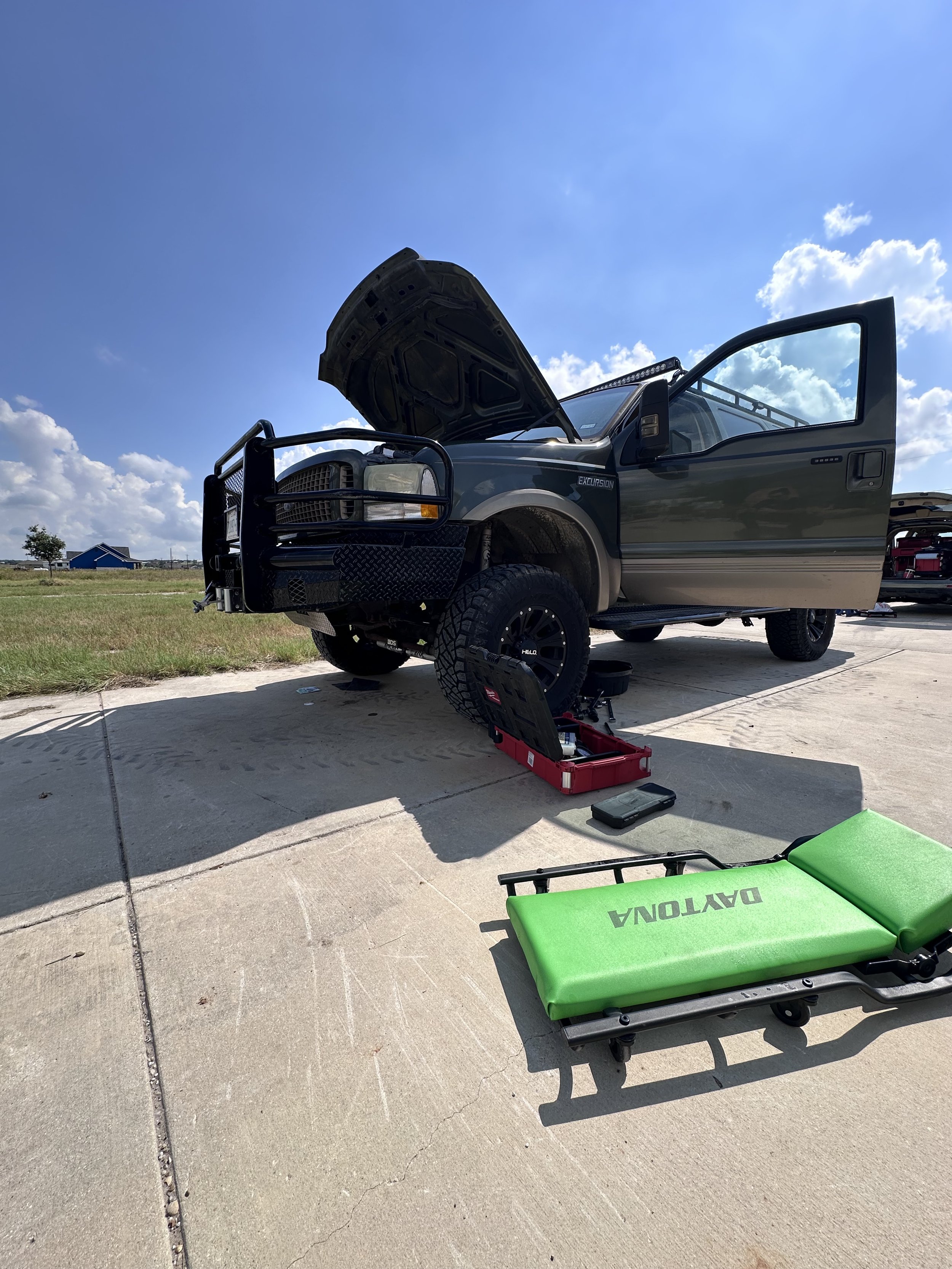
When your steering gets heavy, clunky, or unpredictable, it’s more than an inconvenience—it’s a safety risk. Caleb’s Car Care, Mobile Diagnostics and Repair in San Antonio, brings on-site steering system diagnostics and repairs straight to your driveway so you don’t have to risk driving to a shop.
FAQs
How do I know if my steering system needs repairs?
Common signs include hard steering, pulling to one side, vibration, looseness in the steering wheel, clunking noises, grinding sounds, uneven tire wear, or fluid leaks under the vehicle.
If the steering feels different than normal, it is worth getting checked before the problem gets worse.
Can you fix a steering fluid leak on-site?
In many cases, yes. We can inspect the leak, identify where it is coming from, and repair steering fluid leaks when the job is a good fit for mobile service.
Some leaks may involve hoses, fittings, pumps, racks, or other steering components. We inspect first so we are not guessing.
Do I need an alignment after steering repairs?
Often, yes. Steering work involving tie rods, steering racks, suspension geometry, or related components may require an alignment after the repair.
Caleb’s Car Care can handle the mobile repair portion and let you know when an alignment is needed afterward.
What types of steering systems do you work on?
We inspect and repair many hydraulic and electric steering systems across most makes and models.
The exact repair depends on the vehicle, the symptoms, and what testing shows.
How long do steering repairs usually take?
Many steering repairs take about 1.5 to 3 hours on-site, depending on the part, access, corrosion, and the specific vehicle.
We’ll explain the expected repair time before moving forward.
Is it safe to keep driving with a steering problem?
Sometimes. Sometimes not.
A minor noise may be something that can be scheduled, but heavy steering, sudden looseness, major fluid leaks, grinding, or loss of steering assist should be taken seriously. If the vehicle feels unsafe, do not keep driving it just to “see what happens.”
What Makes Us Different 🛠️
🧭 On-Site Steering Diagnosis — We come to your location and inspect the steering system where the vehicle is parked.
🔧 Mechanical Verification — We check for play, leaks, worn components, loose hardware, and related suspension concerns before recommending repairs.
⚙️ Proper Repair Standards — Steering repairs are handled with correct procedures, torque specs, and attention to safety.
❌ No Guessing at Parts — We do not replace steering components just because something feels off. We inspect, test, and verify the issue first.
📋 Clear Repair Options — You get a straightforward explanation of what we found, what matters, and what should happen next.
🛞 Alignment Awareness — When a repair may require alignment afterward, we tell you before you get surprised by tire wear or steering pull later.
Our Diagnostic Philosophy 🔍
Steering problems can come from more than one place.
A clunk may be a tie rod, control arm, ball joint, steering rack, sway bar link, strut mount, or loose hardware. Hard steering may involve fluid level, a leak, a pump, a belt, a rack, an electric assist issue, or another system problem.
That is why Caleb’s Car Care starts with inspection and testing instead of guessing.
Our goal is simple:
Find the source of the steering concern
Explain what is happening in plain English
Separate urgent safety issues from routine repairs
Help you understand what can be repaired on-site and what may need alignment or shop support afterward
Common Issues We Diagnose and Repair 🔧
Caleb’s Car Care handles many mobile steering system concerns in San Antonio, including:
Hard-to-turn steering wheels
Pulling to one side
Loose steering feel
Clunking over bumps
Grinding or popping while turning
Steering wheel vibration
Power steering fluid leaks
Low power steering fluid
Noisy power steering pumps
Tie rod problems
Steering rack concerns
Electric power steering warning lights
Uneven tire wear related to steering or suspension issues
Steering problems after a recent repair
If the concern points to a larger suspension or front-end issue, we’ll explain that clearly and recommend the next step.
Tools and Methods We Use 🧰
We combine hands-on inspection with the right tools and service information to understand what is actually wrong.
Tools and methods may include:
Professional scan tools
Visual inspection
Front-end and steering component checks
Fluid leak inspection
Power steering fluid condition review
Hydraulic system inspection when applicable
Electric power steering system checks when applicable
OEM torque specifications
Service information and repair procedures
Road testing when safe and appropriate
Post-repair verification
We combine factory-level service data with mobile tools so you get careful steering system repair without starting at a shop.
Why You Shouldn’t Wait ⚠️
Steering problems tend to get worse, not better.
A small leak can become loss of steering assist. A loose component can become a safety issue. A worn tie rod or steering part can cause uneven tire wear, poor handling, or loss of control.
If the vehicle feels loose, heavy, unpredictable, or unsafe, get it checked before it turns into a bigger repair or a roadside problem.
The sooner you get a proper inspection, the better chance you have of protecting the vehicle, your tires, and your safety.